Surface finishing is no longer a labor-intensive task, but a precision-driven one. Quality of coating has a direct impact on the durability, resistance to corrosion and product perception in the current manufacturing environment. In order to keep up with the demands of clients who require flawless finishes as well as tightening global standards, many manufacturing facilities are turning to paint robots.
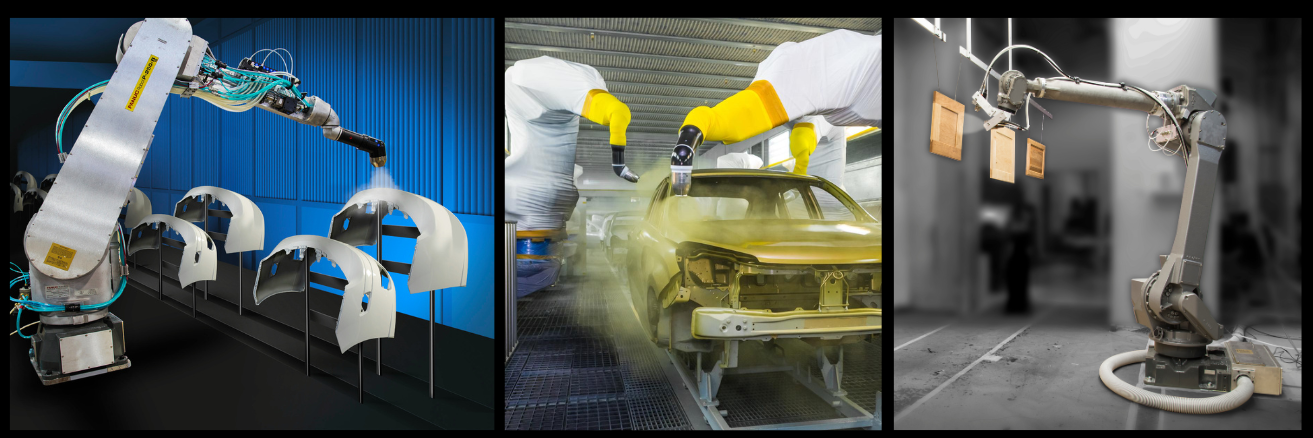
Image credit: automatedsolutions.com.au
A modern paint robot brings structured motion and programmable accuracy to applications that once depended on operator technique. Automating spray paths and angles, as well as speed, eliminates many issues that lead to inconsistent film construction or excessive material use. This method of coating is predictable, which supports First Time Quality, and minimizes the need for rework.
Consistency as well as Efficiency and Measurable Gains
Manual painting can cause variations in thickness and coverage due to fatigue of the human or minor differences in the technique. Paint robots eliminate this variability through the use of the same motion patterns for every cycle of production. This level of repeatability ensures an even surface finish as well as optimal material distribution across every part.
A robotic paint system could also improve transfer efficiency. By keeping precise distances and direction between the applicator and component, overspray is reduced and more coating material is able to reach the surface of the object. A lower amount of material waste directly affects the cost of production, and a reduction in volatile organic compound emissions support efforts to ensure environmental compliance.
The integration of fluid handling into paint robotics guarantees the accuracy of mixing ratios in multi-component coats. This eliminates inconsistencies that can compromise finish integrity. The combination of stable flow control as well as programmable parameters allows producers to fine tune the atomisation parameters and spray patterns in real time, without disrupting production.
Safety and productivity
A major benefit of choosing an automated painter is the increased efficiency. Robotic paint cells work constantly and without interruption unlike manual processes. Once they have been programmed, they produce the same output without breaks or continuous supervision.
In the case of solvent-based or two-component coatings, safety concerns are vital. Atomised paints can produce hazardous environments, especially when dealing with flammable or reactive substances. Modern paint robots can operate with safety in challenging situations. This lowers the risk of exposure to toxic chemicals and improves safety at work.
Conveyor tracking technology further strengthens productivity by allowing robotic paint application while components remain in motion. This feature expands the working space and keeps production lines running efficiently.
Australian Automation Expertise Supporting Industry
For those who want to modernize their finishing operations, access to experienced automation partners is vital. In Australia, Automated Solutions has earned a reputation for delivering advanced robotic integration services. The team has vast experience in the field of automation engineering and is certified as FANUC robot integration experts. They help businesses implement customized robotic paint solutions to their requirements.
Automated Solutions combines technical expertise as well as practical experience from the industry to assist manufacturers in evaluating existing processes and developing robotic paint cells that are optimized. By combining collaborative design with simulations and integration of systems, companies can gain a better understanding of the expected performance improvement before installing.
Paint robotics is not simply automation. It is about improving safety, quality, and efficiency. A well-designed paint robot system transforms the process of finishing surfaces into a precise, repeatable, and cost-effective operation. Manufacturers can enhance their competitiveness by partnering with experts in automation who have the experience to help to achieve sustainable success in an ever more demanding.